After a less successful start in 2016, when the economy of the Transnistrian region was hit by a drastic crisis, in 2017 and the first four months of this year, exports of economic agents from the left bank of the Nistru river to European Union increased spectacularly, desmanteling the myth according to which the region would remain outside the Free Trade Agreement.
The region of the Republic of Moldova on the left bank of the Nistru River was the most industrialized part of the economy of Sovietic Moldova, with about 40% of its industrial potential settled on the left bank.
A strong industrial potential
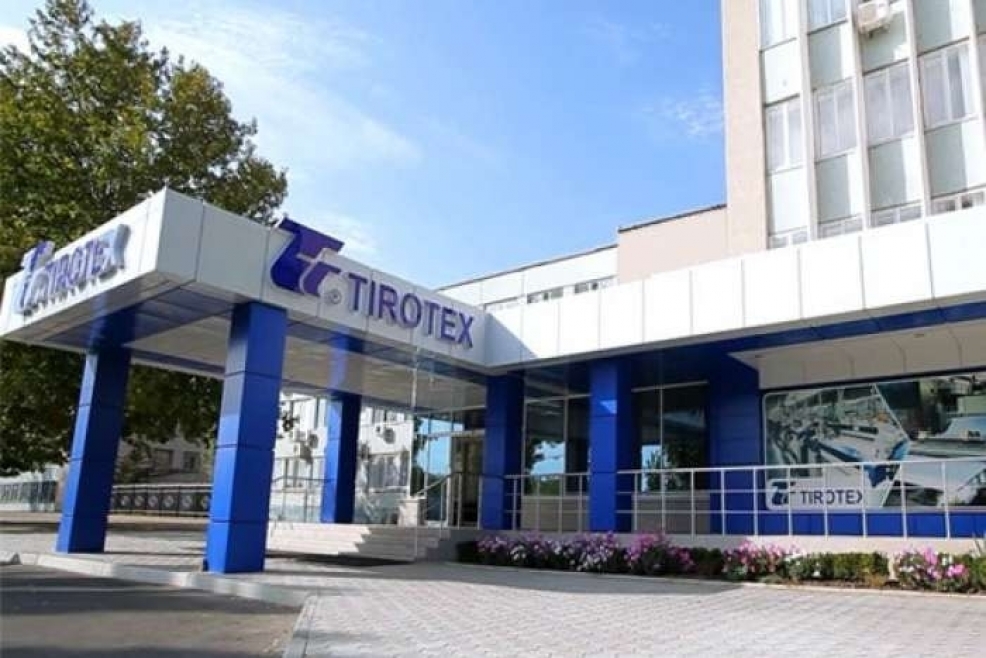
Here businesses operate in branches such as steel, electricity, metal processing, car construction, electronic engineering, chemical industry, construction materials industry, light and food industries. The region's industry is largely focused on several major pillars such as Ribnita Metalurgical Plant, Cuciurgan Thermal Power Plant, Tirotex Textile Factory from Tiraspol or Ribnita Cement Factory, all of them have sales markets in the West or on the right bank of the Nistru.
Imports from East, exports to West
If the largest volume of imports in the region comes from the Eurasian Union, mainly from Russia, the trade is firmly directed westwards, across Nistru and beyond, to the European Union.
Therefore, the Tiraspol authorities and the Transnistrian economic agents have accepted the region's accession to the Deep and Comprehensive Free Trade Area, implemented within the framework of the Association Agreement between the European Union and the Republic of Moldova.
Starting with 1 January 2016, the region entered the Deep and Comprehensive Free Trade Area (DCFTA) provided in the Association Agreement signed by the EU and the Republic of Moldova on 27 June 2014. The Transnistrian region's trade with the EU is an asymmetric one. Periodically, once a year, this provision is re-examined by the Association Council and the DCFTA's functioning on the territory of the region is extended by one year.
Statistics show a strong growth in exports to EU
Regarding the modality in which the things have evolved, we can only deduce comparing the trade statistics of the Transnistrian region in 2015 before the DCFTA and the subsequent years. In 2016, the first year of operation of DCFTA, there was no evidence of an increase in exports of goods of Transnistrian origin to the EU countries. On the contrary, there was a decrease of 18% from 199 million in 2015 to 163 million dollars in 2016.
Moreover in 2016, exports declined by 21% in the light of a drastic economic crisis in the region. With the overcoming of the crisis, the effects of DCFTA began to be felt. Already in 2017, according to the data of the Chamber of Commerce and Industry in Tiraspol, exports to EU reached 239.5 million Euros and continue to increase.
According to the data of the Customs Service in the region, during January-August of this year, from the total volume of 472,4 million dollars of the entire exports, 171 million dollars or 36% referred to the European Union. For comparison, the goods exported to Eurasian Union valued 50.07 million dollars or 11% of the total.
Statistics show that the largest volumes of Transnistrian goods were exported to the territory on the Right Bank of the Republic of Moldova, which holds a share of 28% of the total, which represents goods worth 133 million dollars. Ukraine has a share of 22% with a volume of 103 million dollars and Romania - a share of 17% with an export volume of about 80 million dollars. Russia is only the fourth with a volume of Transnistrian goods of 46 million dollars and a 10% share similar to that of Poland, the last one aspiring to a volume of Transnistrian goods worth 46 million dollars in the first eight months of the current year.
Regarding the structure of exports, according to statistics of the Customs Service of the Republic of Moldova, throughout one year, from December 2016 to November 2017, about 91% of footwear exports in the region reached the EU. Metal products of 79% and textiles in proportion of 77% accounted for the EU member states. On the other hand, Transnistrian agricultural products and foodstuffs accounted for only 19% of total exports to the EU.
The large volume of Transnistrian supplies on the territory on the Right Bank of the Nistru River is due in particular to the deliveries of electricity from Cuciurgan thermal power plant. The value of its deliveries on the Right Bank amounted in the first eight months of the year to about 76 million dollars, which represents almost 57% of the total volume of Transnistrian products purchased on the Right Bank of the Dniester River.

It should be also noted that in some cases the high export quotas are due to massive deliveries of metal products produced at Ribnita Metallurgical Plant.
For example, Transnistrian exports to Romania in the first eight months of this year consisted of 96.11% of Ribnita's plant products (over 77 million dollars) and those that reached Poland were in proportion of 95.72% (44.3 million dollars). In turn, exports of Transnistrian metals to Ukraine amounted to 48 million dollars, which represents 46.63% of total exports to Ukraine.
Although the figures look pretty good, the example of Ribnita Plant highlights the fragility of the economy of Transnistrian region, which depends on the activity of only a few such enterprises, and if one of them faces problems such as markets or raw material supply, it can shut down and, subsequently, the whole economy of the region would suffer.

Tirotex - a model for sustainable entry on European market
This is why it is very important for companies in the region to ensure an uninterrupted production cycle in line with international standards and build long-term relationships with customers. An example in this sense is the Tirotex textile factory in Tiraspol, which produces both qualitative and relatively expensive items and has no other choice but to sell them on EU markets.
Tatiana Lariusin, expert at the Institute for Development and Social Initiatives, „Viitorul”, explained to us that this enterprise is mainly targeting middle class buyers in the European Union. The enterprise simply does not have other alternative markets because the products are of high quality and they have fairly high prices for buyers in the Republic of Moldova, Ukraine or Russia.
That is the reason why the company was one of the most active in the negotiation of export conditions under the Free Trade Agreement and it continues to come up with constructive proposals on facilitating customs procedures and it even found solutions, both for the Chisinau authorities and for the Tiraspol authorities, regarding the certification of goods from Transnistria.
In general, the European Union markets are attractive to businesses on the Left Bank of Nistru even though there are a number of difficulties for companies in the region, linked to the different status of the eastern districts from an administrative point of view.
The entrepreneurs on the Left Bank are worried about the future functioning of the Agreement in the region
It is namely because of this status that the DCFTA provisions are not valid for unlimited period as for the region on the Right Bank and must be renewed at the beginning of each year. This would be one of the main concerns of the entrepreneurs on the Left Side, according to Natalia Calenic, Vice-President of the Chamber of Commerce and Industry of the Republic of Moldova.
"Transnistrian businessmen, who are members of our Chamber of Commerce, are pleased with the possibility of tax-free exports within the DCFTA, but they are worried about the future functioning of these provisions in the region.", explained Ms. Calenic, revealing that the lack of certainty for the next day is invoked by most of the Left Bank entrepreneurs who cooperate with the CCI.
The CCI is among the few structures from the Right Bank that can operate freely on the Left Bank. There is even a branch of the Chamber in Ribnita.
Due to this possibility, the issue of the certificate of origin for export was solved through CCI. The Chamber carries out an expertise on the origin of goods produced in Transnistrian region, based on which Moldovan authorities draw up the certificate of origin necessary for export.
Otherwise, the export procedures are the same as those through which pass all exporters from the Right Bank. As far as imports are concerned, Transnistrian companies pay customs duties, excise duties and other import-related payments in the region's budget. However, the companies are afraid that at some point the authorities from the Right Bank could also require them to pay those taxes, though there were no intentions from authorities to apply such requirements.
According to Natalia Calenic, Transnistrian companies - members of the CCI benefit from systematic training on DCFTA provisions and marketing requirements on European markets, etc.

"The orientation towards West is natural, but the policy of small steps should be followed"
Things, however, are not as simple as it would seem at first glance. " Yet, strong destructive interests exist and intervene in the way of getting closer. On the other hand, the pragmatism of businessmen is likely to move things related to this issue," says Tatiana Lariusin, who was part of a mixed group of experts from the both sides of the Nistru river, who sought solutions for the DCFTA implementation on the Left Bank.
The orientation of Transnistrian economy towards West is natural, given the proximity of European markets compared to the Eurasian ones. "Despite many barriers currently in place, the situation shall be settled gradually, over time, with small steps if the pragmatic interests of the business are put at the forefront," the expert concludes.

Acest website a fost elaborat cu asistența Uniunii Europene în cadrul proiectului “Suport pentru Cadrul Infrastructurii Calității în contextul DCFTA în Republica Moldova” și este susținut de proiectul Uniunii Europene ”Comunicare Strategică și Suport pentru Mass Media”

 Română
 Русский